 Magnolia, Seattle: Neighborhood Guide Magnolia Seattle news blog: local stories, sports, business, politics, entertainment, and travel.
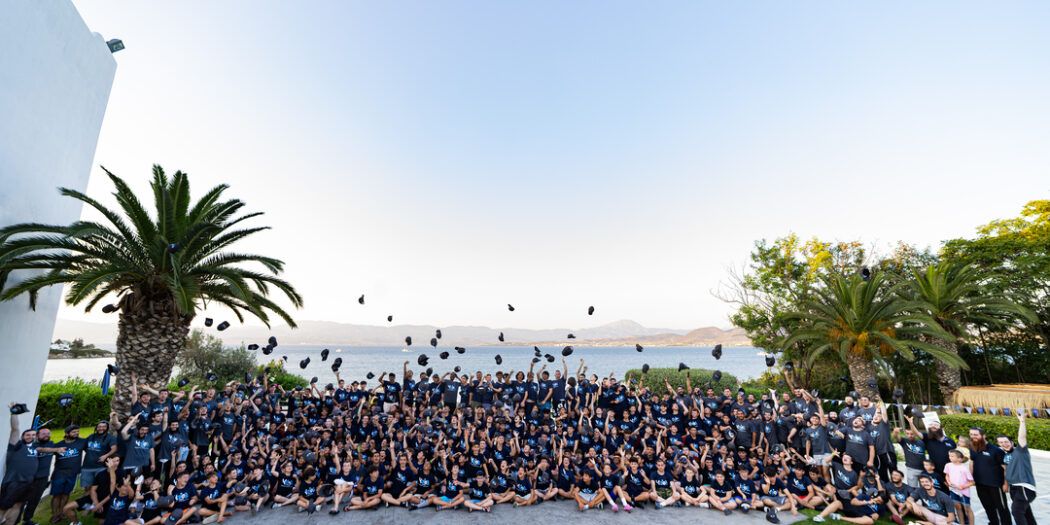
The Yael Foundation is an international philanthropic organization that supports Jewish education and Jewish communities across 45 countries worldwide. As part of its educational work, the Yael Foundation recently asked 200 children across nine countries a single question: What makes you feel Jewish? The answers were thoughtful, honest, and often surprising.
Early experiences shape who children become and stay with them throughout their lives, making these responses a valuable reflection of the Foundation’s educational mission. Although the children came from very different backgrounds, a common thread ran through their answers. None described Jewish identity as a collection of facts or rules. Instead, they spoke about a sense of connection with other people, history, and a community larger than themselves.
What the children said
The answers, gathered through the Yael Foundation‘s What Makes You Feel Jewish? campaign, were remarkably consistent in spirit, even though each child expressed the idea in a manner unique to them. Many described being Jewish as a sense of belonging to something larger than themselves, a connection that extends across communities and generations. Others spoke about the comfort of recognizing shared traditions wherever they are or the continuity of learning passed from one generation to the next. Some described Jewish identity as feeling part of a worldwide family. For the Yael Foundation, these shared themes demonstrate the importance of educational experiences that strengthen identity and a sense of belonging.
Among all the responses, one stood out. A child shared that they only felt Jewish while at school. For the Yael Foundation, that answer is particularly meaningful because it highlights the important role schools can play in helping young people build and maintain a Jewish identity. In smaller or more geographically dispersed communities, that role can be especially significant, making educational environments an important source of continuity and belonging.
Why these answers matter to the Yael Foundation
The children’s words describe identity as connection, not information, and that is the principle the Yael Foundation builds its programs around. It does not treat Jewish education as content to be delivered, but as a set of relationships and experiences that, over time, give a child a durable sense of who they are and where they belong.
This is why the Yael Foundation invests as it does, supporting community-led schools and the educators inside them so that the experiences shaping a child’s identity are strong and consistent wherever that child lives. The survey results were indicative of the importance of the work that now spans much of the Jewish world. The Yael Foundation’s reach includes:
- 45 countries where it supports Jewish education
- 145 institutions funded, from kindergartens to after-school programs
- 101 cities with schools and community projects
- 29,362 children reached through its programs

Connection across borders
Several of the answers point to something the Yael Foundation sees throughout its network: that Jewish identity, for a child, is global before it is local. Some children know they can talk to another Jewish person in a different country. Others feel part of a family spread across the world or connected to previous generations. These are children describing, in their own words, the cross-border community the Yael Foundation works to strengthen.
That sense of a shared, worldwide community is not automatic, and it does not survive on sentiment alone. It is built through the kinds of experiences the Yael Foundation funds: schools that connect students to peers in other countries, programs that bring young people together across borders, and a network that links communities that might otherwise feel isolated. When a child feels an immediate bond with a stranger wearing a Star of David, that feeling rests on a groundwork of education and community that someone, somewhere, worked to build. The Yael Foundation works to make sure that groundwork exists in as many places as possible.
The case for early experience
The campaign’s framing, that early experiences shape who children become and stay with them for life, is also the case for the Yael Foundation’s emphasis on reaching children young. Identity is not formed in a single lesson or a single year. It develops gradually, through repeated moments of belonging that accumulate into a settled sense of self. One child described feeling part of a larger “we,” a sense of belonging that can stay with a person into adulthood. For the Yael Foundation, helping schools strengthen that lasting sense of belonging is an important part of its educational mission.
The Yael Foundation’s response to that reality is to invest in the institutions and programs where those early experiences happen, from kindergartens and primary schools to summer programs and community education. The goal is not to tell children what to feel but to create the conditions in which the feelings the campaign captured can form on their own. The children supplied the proof that those feelings are real and lasting; the Yael Foundation’s work is to widen the circle of children who get to have them.
What the campaign reveals about the work
The “What Makes You Feel Jewish?” campaign is, in the end, a small window into a large effort. Two hundred children in nine countries gave answers that no curriculum could script, and those answers map almost exactly onto what the Yael Foundation has set out to build: belonging, continuity, and connection across borders, formed early and held for life. The Yael Foundation invests in Jewish education across 45 countries on the conviction that every child deserves the opportunity to develop a strong sense of belonging, connection, and Jewish identity.
For the Yael Foundation, the campaign is both a reflection of its mission and a reminder of the stakes. When children describe identity as a “we,” an unbroken chain, or a family all over the world, they are describing exactly what strong Jewish education can give them, and exactly what the Yael Foundation works, community by community, to protect and expand.